
Loading...
Serving Sioux City, IA and surrounding areas. (712) 569-1146
Planning an addition, garage, or new build in Sioux City? We pour slab foundations with footings set to Iowa frost depth - so the ground freezing every winter never shifts what you build on top.
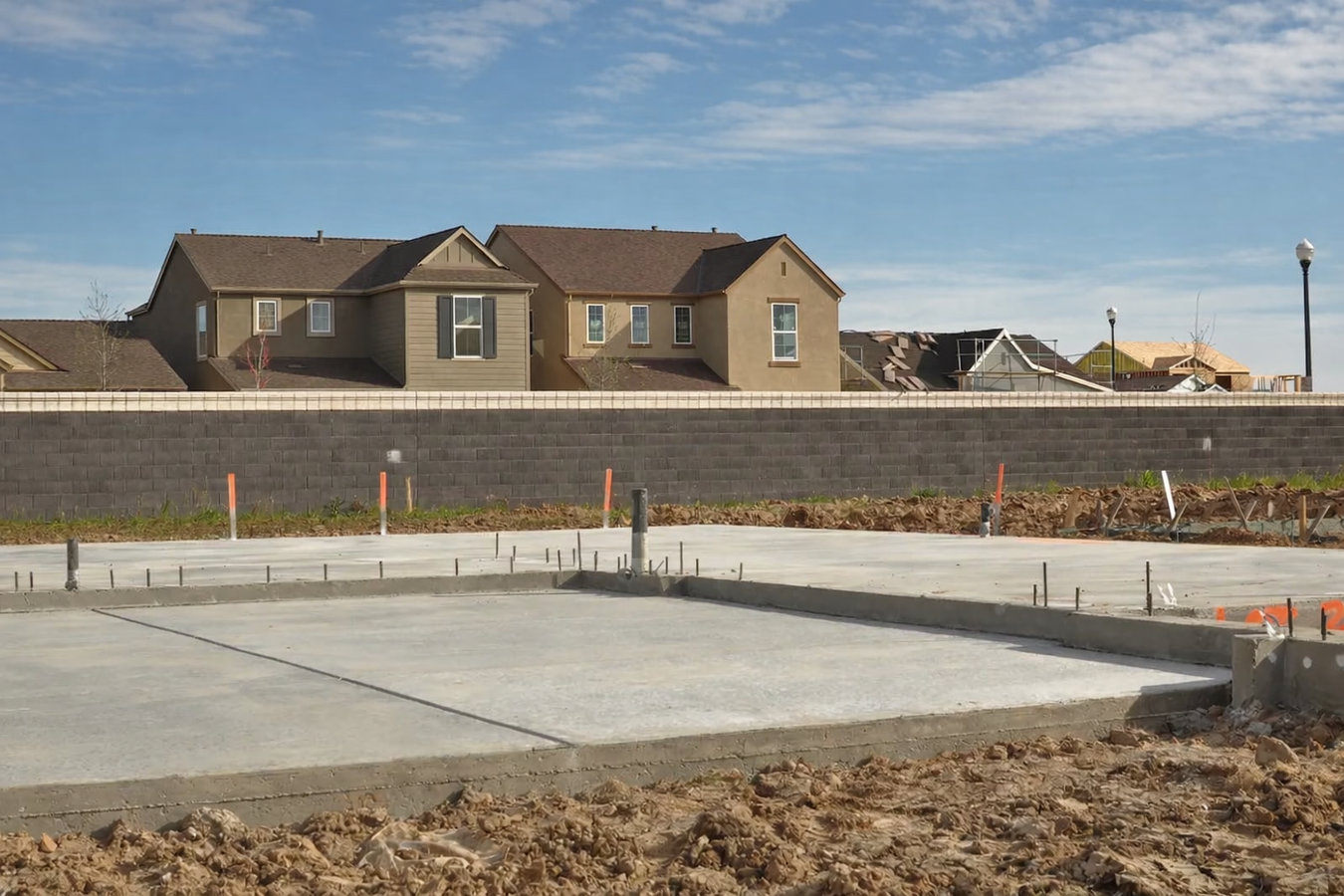
Slab foundation building in Sioux City means excavating and leveling the ground, laying a compacted gravel base, placing reinforcement, and pouring a thick concrete pad that becomes both the floor and the structural base for whatever sits on top - most jobs run one to two weeks from permit to a cured, walkable surface.
Many Sioux City homeowners call us about slab work when they are building an addition, replacing a failing garage floor from the 1960s or 1970s, or starting a new build on a vacant lot. In all three cases, the core challenge in Sioux City is the same: the ground here freezes deep every winter, and a slab that was not designed for that reality will heave, crack, or settle over time. Doing it right from the start costs less than fixing it later.
If your project also involves the walls and structure that sit on the slab, our foundation installation service covers full foundation systems - footings, walls, drainage, and backfill - for homeowners building from scratch or replacing an aging foundation under an existing structure.
Small hairline cracks are normal as concrete ages, but cracks wider than a quarter inch - or ones where one side sits higher than the other - signal the slab has moved. In Sioux City, freeze-thaw cycles working on a slab that was not set deep enough are a common cause. These cracks tend to grow wider each spring after the ground thaws.
If water consistently collects against your foundation or seeps under a slab after spring rains, the drainage around your foundation is not working. Over time, that moisture softens the soil beneath the slab and leads to settling and cracking. Sioux City's heavy spring rainfall and snowmelt make this a recurring problem for properties that were not graded correctly.
A slab that has started to separate from the soil beneath it will feel slightly springy or hollow when you walk on it, especially in certain spots. This is a sign the base is no longer supporting the slab uniformly. Garage floors in older Sioux City homes from the 1950s through 1970s are particularly prone to this after decades of frost heave.
If you are adding a room, garage, or shed to your property, a new slab is the structural starting point - everything above it depends on it being level and stable. Getting the base prep and footing depth right from the start is far less expensive than correcting problems after walls and a roof are already in place.
We pour residential and light commercial slabs for additions, garages, outbuildings, and new home construction across the Sioux City area. Every project starts with excavation and ground grading, followed by a compacted gravel base, vapor barrier, and steel reinforcement - the groundwork that determines whether a slab lasts 10 years or 50. Slab thickness typically runs four to six inches for residential use, with thicker reinforced edges where the walls of the structure will bear. Control joints are cut in planned locations to guide any future cracking into predictable lines that do not compromise the slab.
For homeowners who need the full picture - not just the slab but also footings, drainage, and waterproofing for a complete foundation system - our concrete footings work can be paired with the slab pour to handle the deeper structural elements in one coordinated project. We also replace failing garage floors and existing slabs that have cracked beyond repair, including demolition and haul-away of the old concrete.
For homeowners adding a room, sunroom, or enclosed porch - matched to the elevation and drainage of the existing structure.
For detached garages and new attached garages, sized and reinforced for the vehicles and loads you actually park on it.
Removal of cracked or failing garage slabs from older Sioux City homes, with full haul-away and a properly prepared new pour.
For vacant lot builds - full site prep, frost-depth footing design, and a code-compliant slab ready for framing.
Sioux City sits in a climate zone where the ground can freeze to roughly 58 inches deep in a hard winter - and then thaw completely by late spring. That freeze-thaw cycle is one of the most demanding conditions a concrete slab faces anywhere in the country. A slab poured without footings set below that frost depth will move. Not might move - will move. The ground expanding and contracting around shallow footings year after year eventually cracks or lifts the slab above. This is why you see so many cracked garage floors in Sioux City's older neighborhoods: they were poured to a lighter standard and are now showing the results.
The soil near the Missouri River corridor adds another layer of complexity. Lower-lying parts of Sioux City - and nearby communities like South Sioux City and North Sioux City - have clay-heavy soils that hold water rather than letting it drain. When that soil gets wet, it expands; when it dries, it shrinks. Extra compacted fill and careful drainage planning are not optional in these areas - they are the difference between a slab that holds and one that settles within a few years. We account for this in every project we take on in the Sioux City metro.
We visit your property to assess the site - slope, drainage, soil conditions, and the intended purpose of the slab. You receive a written estimate within one business day that covers base prep, reinforcement, finishing, and any permit costs. No surprises after the pour.
We pull the required City of Sioux City building permit on your behalf before any work begins. The permit process typically takes about a week. Once it is issued, you get a confirmed start date. We also arrange for underground utility marking through Iowa One Call before any excavation.
The crew excavates the area, grades the ground, and lays a compacted gravel base designed for Sioux City soil conditions. Plastic sheeting goes down to block ground moisture, then steel reinforcement is placed. A city inspector visits to verify the base and reinforcement before any concrete is poured.
Once the inspection is passed, the concrete trucks arrive and the pour begins. The surface is finished smooth with control joints cut in planned locations. Plan on 24 to 48 hours before foot traffic and about a week for vehicle use. We walk the finished slab with you and explain what to watch for during the 28-day curing period.
We reply within one business day. Free written estimate, permits handled, no sales pressure.
(712) 569-1146Iowa's frost depth in Sioux City reaches roughly 58 inches in a hard winter. Every slab we pour has footings designed for that reality - not specs written for a milder climate. That difference is the reason your foundation stays level when the ground around it freezes and thaws every year.
We pull every required City of Sioux City building permit before a shovel goes in the ground. Your project is on record with the city and has been through independent inspection - which protects you if you ever sell your home, refinance, or need to make an insurance claim.
Sioux City's lower-lying neighborhoods near the river have softer, higher-moisture soils that require extra care in base preparation. We have worked in these areas and know when extra compacted fill or drainage work is needed - before it becomes a problem after the pour.
We know the older neighborhoods where 1960s-era garage slabs are quietly failing, and we know the newer subdivisions on the south and west sides coming due for their first major concrete work. That local knowledge means fewer surprises on your project.
The Portland Cement Association recommends slab-on-grade design standards that account for local soil and climate conditions - the same principles we apply on every project in Sioux City. When base prep and footing depth are done correctly from the start, the slab you pour now is the slab you are still standing on decades later.
For permit requirements, City of Sioux City Building Services is the official source. For general slab design guidance, the American Concrete Institute publishes resources on mix design and curing standards for cold climates.
Full foundation systems - footings, walls, drainage, and waterproofing for new home builds or aging foundation replacements.
Learn moreIsolated footings and continuous footings that anchor your structure below the Iowa frost line where ground movement cannot reach them.
Learn moreSpring project slots fill fast - reach out now and get a free written estimate before the best weather windows are gone.