
Loading...
Serving Sioux City, IA and surrounding areas. (712) 569-1146
Cracked, sinking, or flaking driveway? We build new concrete driveways in Sioux City designed for our freeze-thaw climate - with the right base, the right mix, and no surprises on the bill.
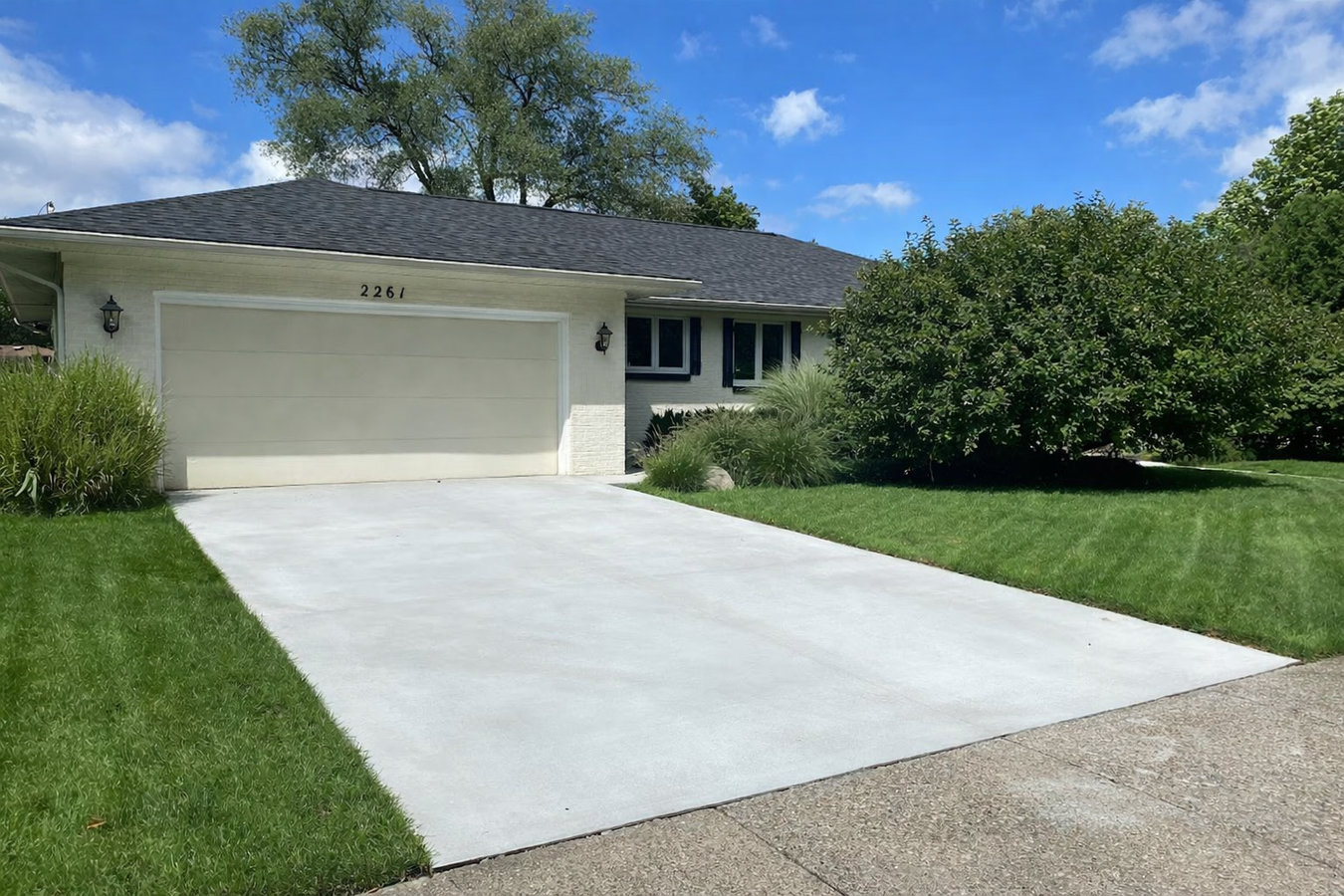
Concrete driveway building in Sioux City means removing your old surface, preparing the ground underneath, pouring fresh concrete, and letting it harden into a solid slab - most jobs run two to four days of active work, with a one-week wait before you can drive on it.
A lot of homeowners in Sioux City are dealing with driveways that were poured in the 1970s or earlier - especially in neighborhoods like Morningside, Leeds, and the North Side. Those slabs have been through decades of freeze-thaw cycles and may have been patched several times. At some point, patching stops making sense and a full replacement is the better investment. If your driveway is more than 30 years old or has cracks you keep coming back to, it is worth a conversation.
If you are also thinking about the area around your garage entrance or a connecting walkway, our concrete patio construction work pairs naturally with driveway projects, and we can often tackle both in a single mobilization to save you time and cost.
If cracks in your driveway keep reopening after patching - or are wider than about a quarter inch - the slab has likely shifted. In Sioux City, this is a common result after years of freeze-thaw cycles working on the base underneath.
When parts of your driveway sit higher or lower than adjacent sections, the ground underneath has moved. This often happens in Sioux City after hard winters when frost leaves and soil settles unevenly. Uneven slabs are also a trip hazard and tend to get worse each year.
If the top layer is peeling off in chips or edges are crumbling, road salt and freeze-thaw cycles have damaged the concrete past the point of repair. Once the surface layer breaks down, deterioration continues inward and patching only delays the inevitable.
Water should run off a properly built driveway within minutes of rain stopping. Regular pooling means the slab has settled unevenly or was never graded correctly. Standing water speeds up cracking and can work its way under the slab over time.
We pour standard residential driveways - single-car, two-car, and extended aprons - using a four-to-six-inch slab depending on what you park on it. Every project includes proper base excavation, compaction, form setting, control joint cutting, and surface finishing. For most homeowners, a broom finish is the right call outdoors because it adds grip in wet conditions, but we can also do a smooth trowel finish or a brushed pattern. We handle full replacements on existing driveways and new installations on properties that have never had concrete.
For homeowners who want something beyond a plain gray slab, our concrete sidewalk building service can extend the project to include a connected walkway from the driveway to your front door, tying the whole entrance together at once. We also offer decorative options - exposed aggregate, saw-cut patterns - for homeowners who want more curb appeal without stepping all the way up to a stamped concrete finish.
Four to six inches, broom or trowel finish, right for most driveways and everyday vehicles.
Five to six-inch slab for homeowners who park trucks, RVs, or heavy trailers regularly.
Exposed aggregate or saw-cut patterns for homeowners who want more visual interest than a plain slab.
Removal of existing concrete or asphalt and full disposal - you do not need to arrange anything separately.
Sioux City winters are hard on concrete. Temperatures regularly swing from well below freezing in January to hot and humid in July. That repeated freeze-thaw cycle causes the ground to expand and contract, putting stress on any slab sitting on top of it. A driveway built to specs designed for a milder climate will not hold up here. The base depth, concrete mix, and control joint placement all need to account for what our winters actually do to the ground - not what national guides assume.
Parts of Sioux City near the Missouri River bottomlands have soils with higher clay content, which expands when wet and shrinks when dry. Neighborhoods like Sioux City near the river and communities like South Sioux City across the river both deal with soil movement that can cause slabs to shift if the base is not built correctly. We know which parts of the tri-state area need extra base attention and which can work with a standard preparation.
Iowa roads get salted heavily in winter, and that salt gets tracked onto driveways by tires every day. It is one of the fastest ways to shorten a driveway's life. The Portland Cement Association recommends sealing concrete driveways in cold climates - we advise every Sioux City customer to seal within the first year and every two to three years after that.
When you reach out, we ask a few basic questions about your driveway - size, whether you are replacing an existing one, and any finish preferences. We schedule a free on-site estimate within one business day to check the slope, drainage, and give you a firm written price.
We handle pulling any required permit from the City of Sioux City on your behalf. Once permits are in order, you get a confirmed start date. During the spring rush, this may be a few weeks out - booking early gets you the timing you want.
The crew removes your old concrete or asphalt and hauls it away. Then we compact the soil and prepare the base to handle Sioux City soil conditions - including the clay-heavy ground near the Missouri River that can shift if the base is not built correctly.
The pour typically takes one full day. After curing - about a week for normal vehicle use - we walk the finished driveway with you and explain sealing and maintenance for our winters. You will know exactly when you can use it again.
We respond within one business day and can usually schedule your free on-site estimate within the same week. No obligation, no pressure - just a straight answer on what your project needs and what it will cost.
(712) 569-1146We use base depths, concrete mixes, and control joint placement designed for northwest Iowa freeze-thaw cycles - not specs written for a milder climate. That difference shows up five winters from now when your driveway is still solid.
Every job that requires a City of Sioux City permit gets one. We handle the paperwork so you do not have to, and your project is on record with the city - which protects you when you sell your home.
Your estimate spells out base prep, concrete thickness, cleanup, and permits. The number you agree to is the number on the invoice. No line items that appear after the pour.
We know the soil conditions near the Missouri River bottomlands, the older neighborhoods where 50-year-old driveways are quietly failing, and how the spring construction season works here. That local knowledge shortens your project timeline.
When you combine local soil knowledge, permit familiarity, and a flat written estimate, you get a driveway project that goes the way it was supposed to go - no surprises, no callbacks, and a surface that holds up through Sioux City winters for decades, the standard every reliable concrete contractor should meet.
More questions? The American Concrete Institute and the Angi cost guide for concrete driveways are helpful starting points, or just send us a message and we will answer directly.
Add a poured concrete patio to your backyard for a permanent, low-maintenance outdoor living surface that holds up through Sioux City winters.
Learn moreConnect your driveway to your front door or extend your walkway with a properly graded concrete sidewalk built to handle Iowa freeze-thaw cycles.
Learn moreSpring fills up fast - reach out now to lock in your spot on the schedule and get a written quote before the rush.